Turning fragmented patient records into coherent clinical narratives

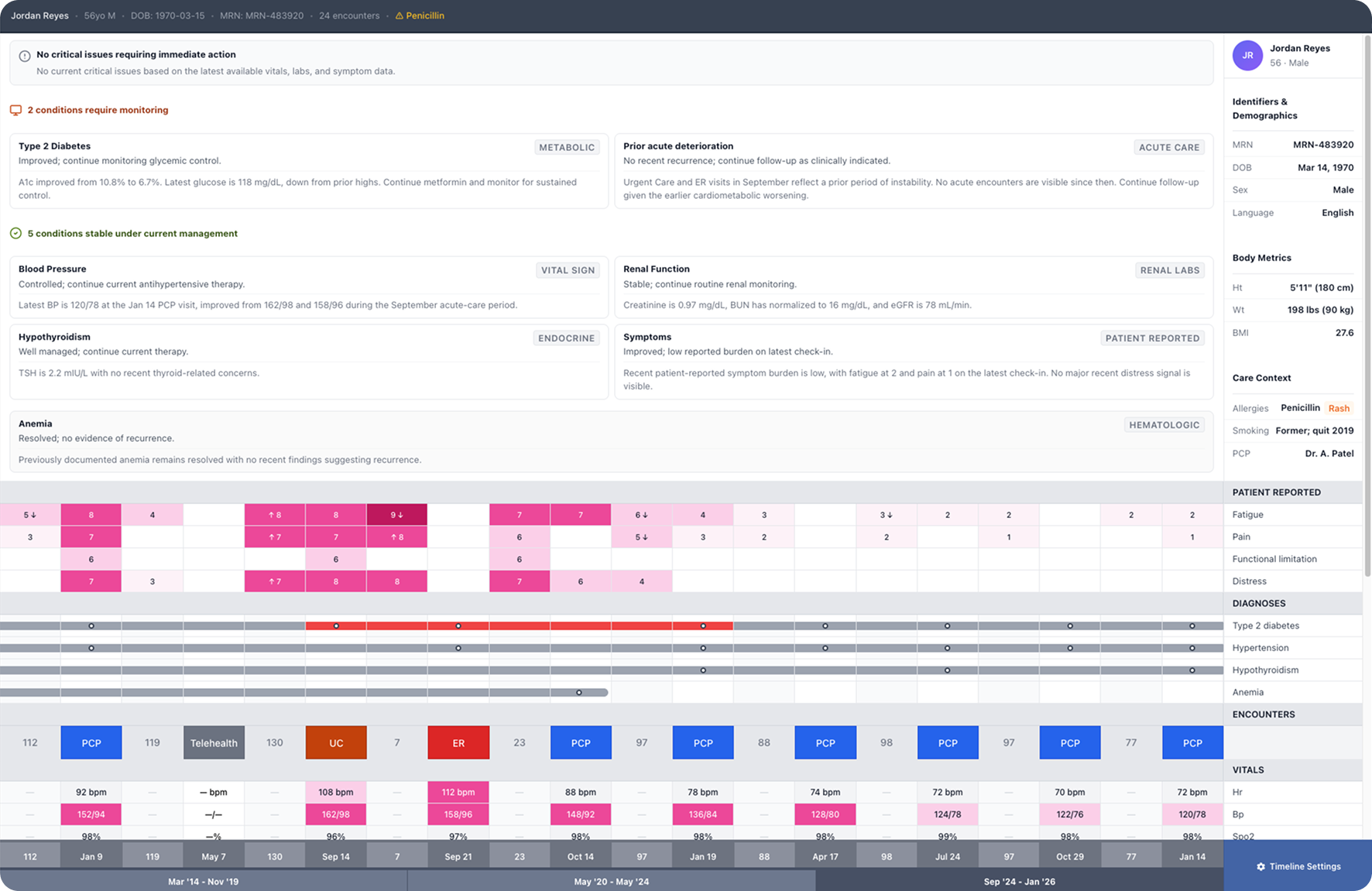
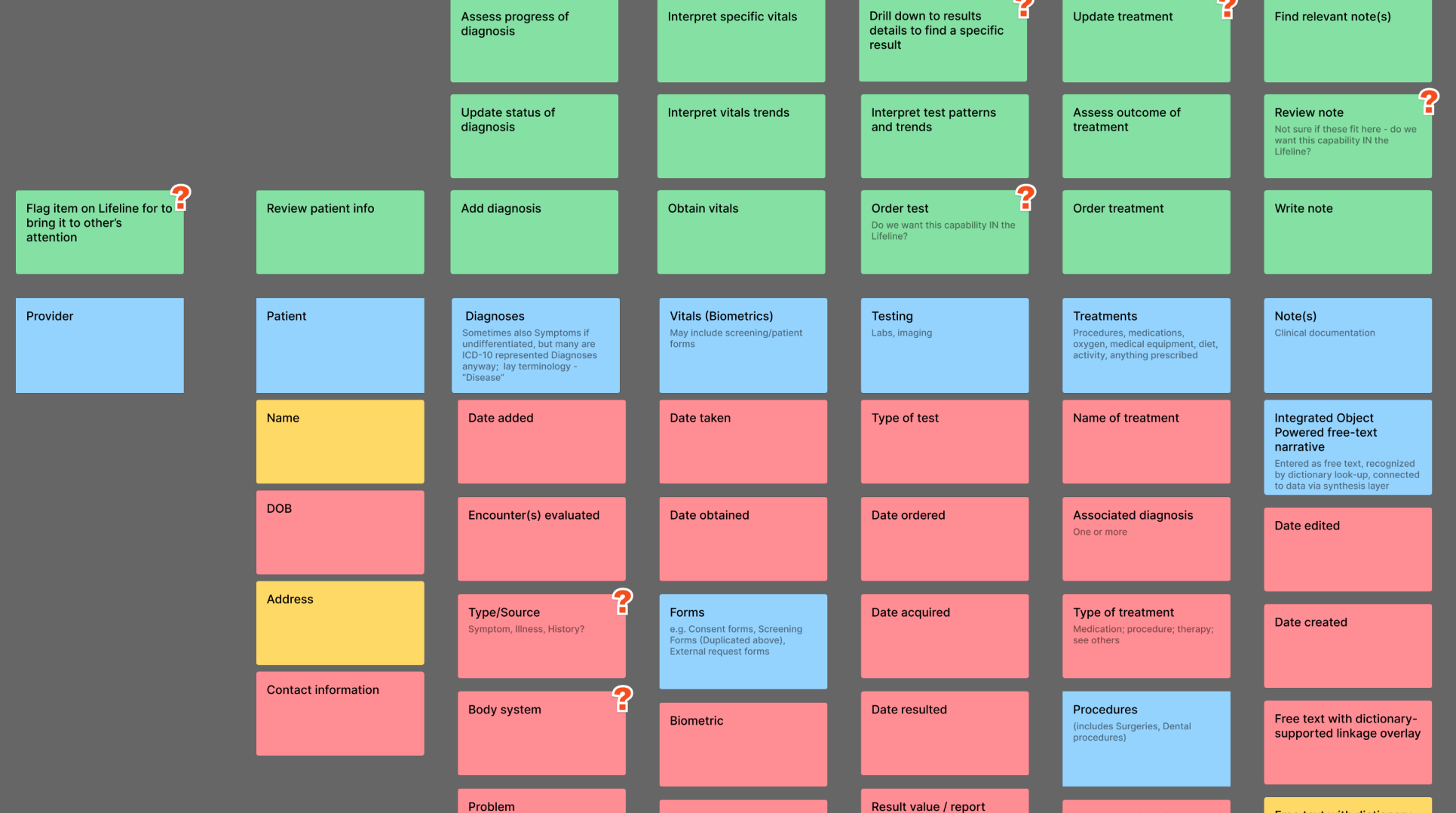
I worked with a practicing physician to design a chart review workflow that makes dense patient data over time easier to interpret, and delivered scalable components now being implemented by his development team.
Founding clinical lead, engineering team, and myself
"As a first-time founder, David's guidance was crucial. His work greatly advanced our team's quality and timeline."

The Problem
Fragmented and Dense Patient Data
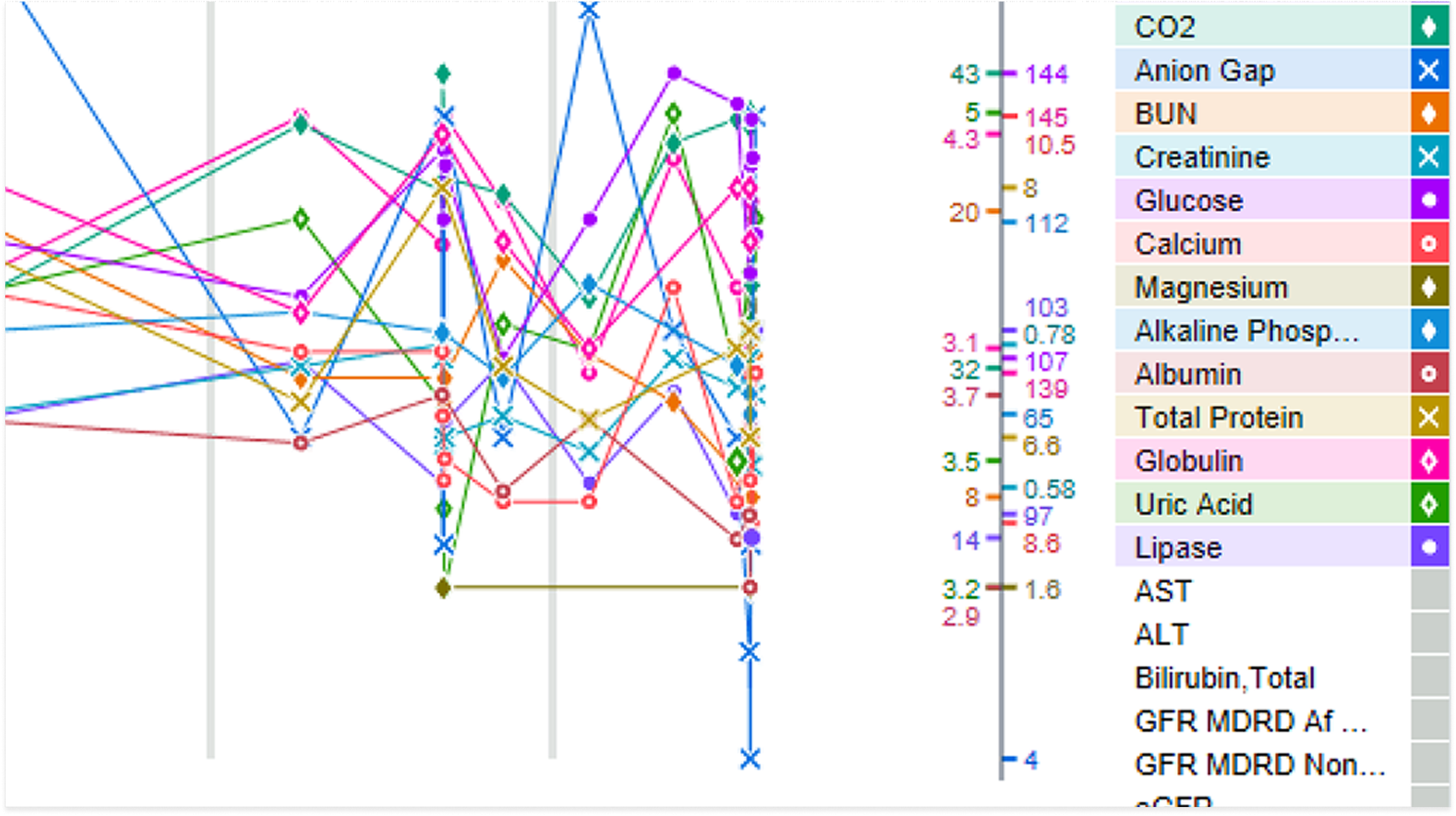
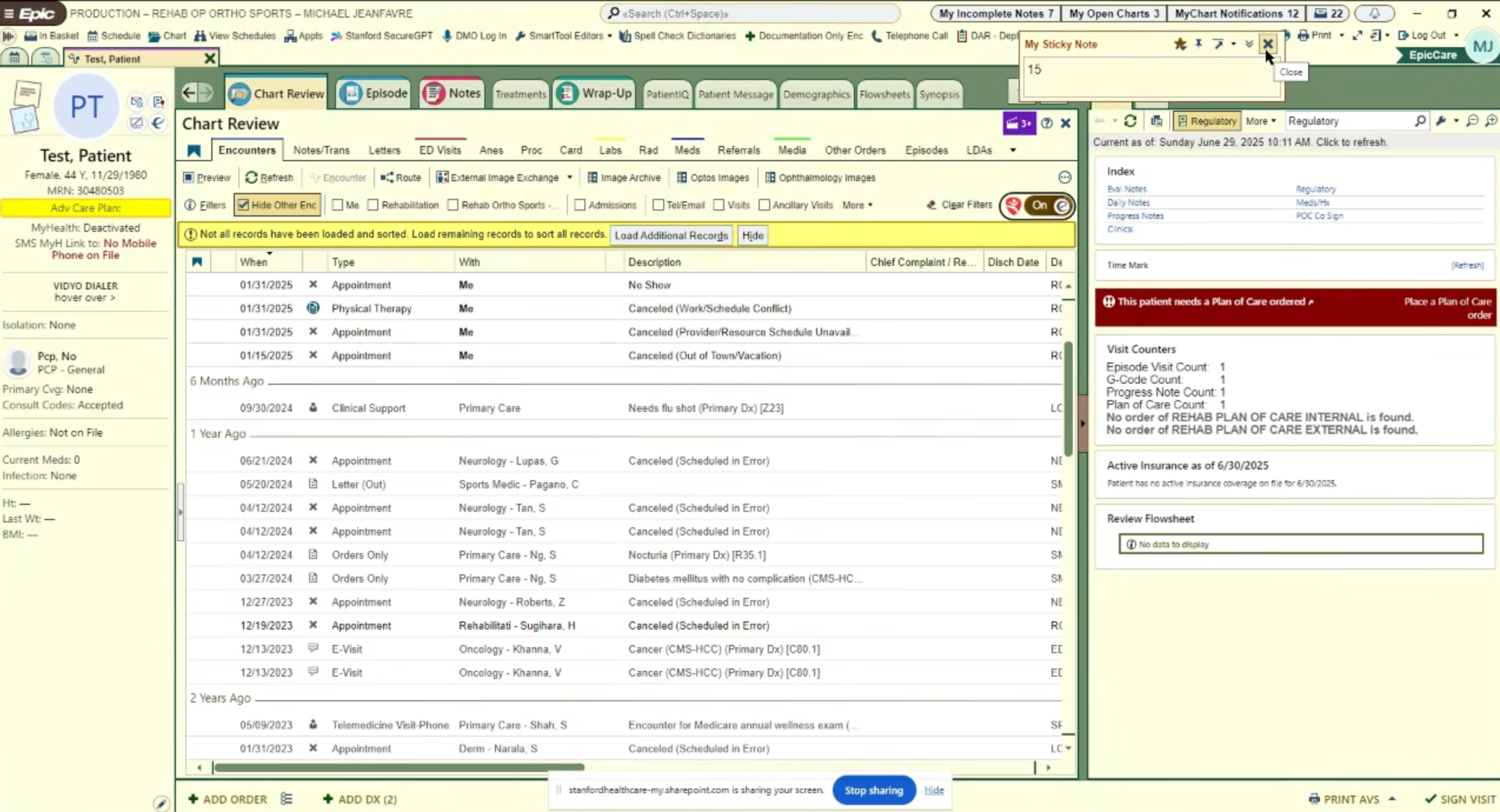
EHRs often organize information by source: labs, notes, medications, encounters, diagnoses, and vitals. But clinicians reason across time. When those streams are separated, clinicians must reconstruct the story manually. When they are combined longitudinally, the view can quickly become too dense to interpret.

Source-oriented review: Clinical data is separated by tabs and data type.

Cognitive overload: Visualizing values over time creates visual noise.
The Solution
From signal to detail
VEHR supports progressive clinical attention: scan for abnormal values, judge severity, detect patterns, then read details when needed.
1. What's abnormal?
Normal values recede. Abnormal values become visible.
2. What's severe?
The most concerning values get the strongest visual emphasis.
3. Pattern over time?
Rows reveal stability, worsening, improvement, recurrence, or clustering.
4. Exact value?
Numbers stay available once the signal is worth reading.
5. What's the context?
Related encounters, medications, diagnoses, notes, and patient-reported data explain the signal.